How to Tell if Baby Has Dairy Allergy
Could My Babe Accept Cows' Milk Allergy?
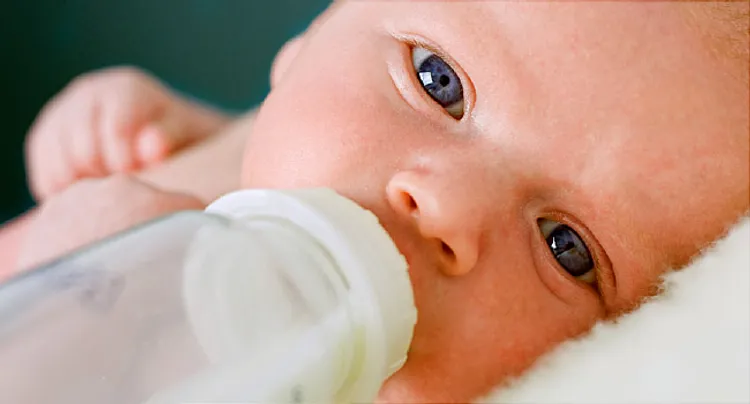
A cows' milk allergy, besides known as cows' milk protein allergy, tin can happen when cows' milk -- consumed by the mother of a breastfeeding baby or used in formula for bottle-feeding babies -- causes symptoms in the baby before being weaned, or if the baby consumes cows' milk protein-containing products during or after weaning. The allergy usually appears in the first year of a baby's life, but most children will outgrow it.
How Common Is Cows' Milk Allergy in Infants?
Simply 0.5% of exclusively breastfed babies are afflicted, and the symptoms are ordinarily mild or moderate. This is one reason breastfeeding exclusively is recommended by experts for the kickoff 4 to half-dozen months of a baby's life.
It is thought that infants who accept a family history of allergy are more likely to have a cows' milk protein allergy. The same goes for infants with eczema and asthma. Those with asthma can accept astringent reactions, especially if their lung disease is poorly controlled.
What Causes Cows' Milk Allergy?
An allergy happens when the body'south immune arrangement mistakes a harmless substance -- in the case of food, a protein -- equally a foreign invader and attacks it, much like it would set on bacteria or a virus. This abnormal response releases chemicals that in plough trigger the symptoms associated with an allergy.
Milk contains both casein (which forms the curd when milk goes sour) and whey (the watery part left when the curd is removed), and each of these has several different proteins, any of which tin cause an allergic response.
A cows' milk protein allergy tin can cause different kinds of reactions, depending on the chemicals released, and the allergy is categorized based on these causes:
- Immunoglobulin E (IgE)-mediated reactions: The allowed system releases histamine and other chemicals in response to cows' milk protein. The symptoms usually occur within 20 to 30 minutes of consuming the protein, merely they tin can announced upward to 2 hours afterward.
- Non-immunoglobulin E-mediated reactions: T cells are thought to be the trigger for the symptoms, which appear more gradually, from 48 hours upwardly to a week later consuming cows' milk poly peptide.
- Mixed IgE and non-IgE reactions: This is a combination of immunoglobulin E-mediated reactions and non-immunoglobulin E-mediated reactions.
A cows' milk allergy should not exist confused with lactose intolerance, a condition in which the body cannot produce enough of the enzyme needed to digest a type of sugar found in milk.
What Are the Symptoms of Cows' Milk Allergy?
A wide range of symptoms tin be triggered by a cows' milk poly peptide allergy, ordinarily involving the peel, gastrointestinal tract, and respiratory tract. Those that involve the respiratory tract often appear along with other symptoms. These include:
IgE-mediated symptoms (these are acute and come up on more chop-chop)
- Skin reactions: Itchiness, reddening of the skin, sudden itchy rash (urticaria -- either in one spot or generally all over), or swelling, most frequently of the lips, face, and around the eyes
- Gastrointestinal reactions: Swelling of the lips, tongue, or palate in the mouth, itchiness in the mouth, nausea, airsickness, colicky abdominal pain, or diarrhea
- Respiratory reactions: Itchy nose, sneezing, runny nose, congestion, cough, wheezing, or shortness of breath
Non-IgE-mediated symptoms (these are not-acute and are delayed)
- Pare reactions: Itchiness, reddening of the skin, or eczema
- Gastrointestinal reactions: Acid reflux or gastro-esophageal reflux disease (GERD), loose or frequent stools (poo), claret or mucus in poo, abdominal pain, colic, constipation, refusing food or aversion to food, redness in the perianal surface area, tiredness
- Respiratory reactions: Cough, wheezing, or shortness of breath
In rare cases, a child may have an anaphylactic reaction, which requires emergency medical aid because it can be fatal. Call an ambulance if yous recollect your babe is struggling to breathe or is floppy.
A cows' milk protein allergy can sometimes lead to complications due to malabsorption or poor nutritional intake. The child may get chronic fe deficiency anemia or fail to thrive.
How Is Cows' Milk Allergy Diagnosed?
If yous doubtable your infant might accept a cows' milk poly peptide allergy, make an appointment to see your pediatrician, who will ask almost the child's family unit history to find out if other members of the family have a food allergy, asthma, eczema, or allergic rhinitis. The doc will want to know all almost the symptoms and when they starting time appeared.
Before confirming a diagnosis of cows' milk allergy, other conditions that may cause similar symptoms -- such equally a nutrient intolerance, other nutrient allergies, Crohn's illness, celiac disease, and GERD -- may demand to exist ruled out.
If the doctor suspects an IgE-mediated cows' milk protein allergy, your baby will usually be referred to an allergy specialist for a skin prick examination and/or an IgE antibody claret test. If confirmed, then strict avoidance of cows' milk protein is needed.
For suspected non-IgE-mediated cows' milk protein allergy, the md may not need to refer your child to a specialist unless there are concerns about your child's growth or symptoms are acute or astringent. Your doctor may recommend trying an elimination diet in which cows' milk poly peptide is removed from the child's diet -- or the mother's if the baby is totally breastfed -- for a certain period of time, then reintroduced. If your baby has the allergy, their symptoms volition get away during the elimination menses then come back.
Beware of complementary or alternative health tests for food allergy, such as pilus analysis or applied kinesiology. In that location's no scientific evidence that they piece of work, and an incorrect diagnosis of a food allergy or intolerance may lead to unnecessary dietary exclusions. Cut out a big number of foods on the ground of these tests can lead to nutrient deficiencies that can mean your child may fail to thrive.
Can an Infant Outgrow Cows' Milk Allergy?
Most children will outgrow cows' milk allergy.
Studies testify that most children with non-IgE-mediated reactions volition outgrow cows' milk allergy past the fourth dimension they are iii years old.
For children with IgE-mediated reactions, studies show that virtually one-half of these children volition outgrow cows' milk allergy by the time they are 5 years old. Evidence suggests that a cows' milk protein allergy is more than likely to persist in these children if they have asthma or allergic rhinitis, or if they take more astringent reactions or higher milk-specific IgE antibiotic levels. Even so, it's rare for adults to have a cows' milk allergy.
Volition My Infant Need Any Treatment?
If cows' milk allergy is diagnosed, cows' milk protein will need to be eliminated from your child's nutrition.
For breastfeeding moms, that ways you can't have any dairy in your own nutrition. Cut out milk, butter, cheese, yogurt and ice foam, plus prepared foods that utilise dairy, like a lot of baked goods. Goats' and sheeps' milk have similar proteins to cows' milk, so those products are off-limits too. Dairy tin can hide in processed foods under different chemical names, so check labels for:
- Casein
- Caseinates
- Curd
- Hydrolysed casein
- Lactose
- Lactoglobulin
- Milk solids or milk sugar solids
- Whey
- Whey syrup sweetener
It'due south difficult to get enough calcium and vitamin D when you don't eat dairy. Talk to your physician nigh calculation other calcium-rich foods to your nutrition, or taking a supplement.
If you're bottle feeding, your md tin recommend an allergy-free formula:
Extensively hydrolyzed formulas (eHFs): Nigh 90% of infants with a cows' milk protein allergy can tolerate extensively hydrolyzed formulas. Although these are based on cows' milk, so the food content is the same as normal infant formulas, they have been extensively cleaved down into tiny parts then that the child's immune organisation is less likely to recognize the protein.
Amino acrid formulas (AAFs): If your child has trouble with a hydrolyzed formula, or has severe symptoms -- such as severe peel or gastrointestinal symptoms or has had an episode of anaphylaxis -- an amino acrid formula may exist recommended.
Don't assume a soy-based formula volition be safety. It can too crusade a reaction in babies with a cows' milk allergy.
You will too be given advice on how to wean your child following a diet that excludes cows' milk. Because cows' milk provides a lot of important nutrients, especially calcium, a pediatric dietitian can help ensure that your child is getting enough of all the nutrients necessary for healthy growth.
Y'all should be given a management programme that volition not only include how to feed your kid, merely also treatment, such as antihistamines or creams in cases where a child has eczema. Follow-upward appointments should continue to ensure your kid is thriving.
Considering children can outgrow cows' milk allergy, your kid should be reassessed as frequently as your doctor recommends, to determine if there is a change in tolerance of cows' milk protein.
Source: https://www.webmd.com/parenting/baby/baby-cow-milk-allergy
0 Response to "How to Tell if Baby Has Dairy Allergy"
Post a Comment